

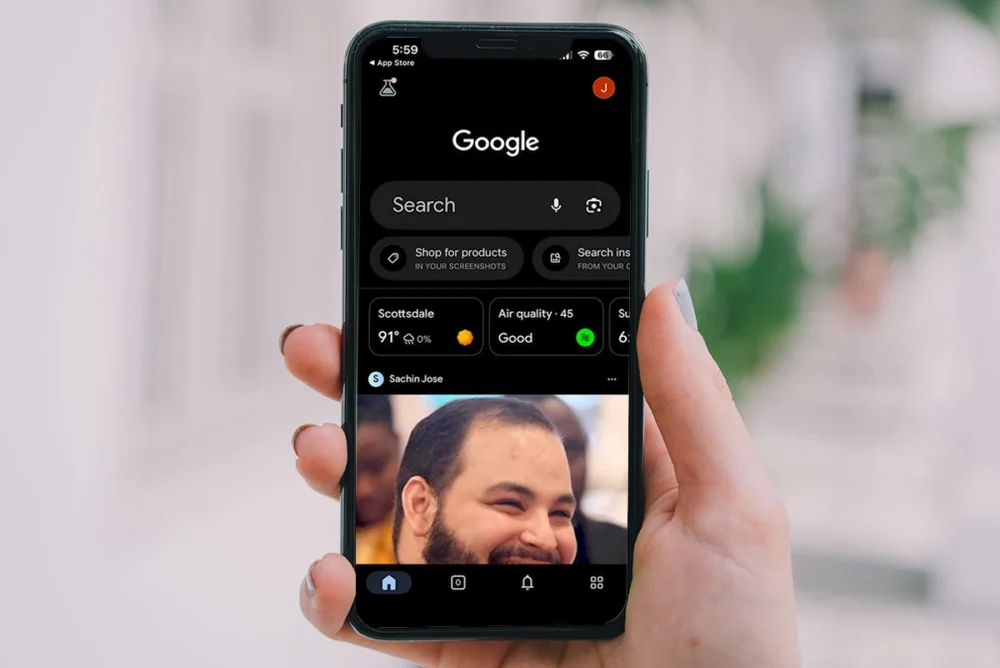
Before I explain Google’s February 2026 Discover Core update, let us first recognize that many people may not even know what Google Discover is, despite having likely interacted with it while using their smartphones.
What is Google Discover?
Simply put, Google Discover is a content feed within Google’s mobile search app, that automatically suggests articles, videos and other information based on your interests, as determined by your past search activity while using Google services.
Google Discover vs Google Search
You should know that Google Discover differs from their Google Search. How? While they both try to find better quality of content through differing ranking signals, search focuses on keyword query matches prioritizing deeper user intent while Discover addresses what users like, based on their past clicks. In other words, Google Discover and Google Search use different algorithms. Thus, Google Discover is “interest-based” while Google Search is “intent-based”. It is important to note that while the “algorithms” differ, both Google Discover and Google Search follow the same E-E-A-T (Experience, Expertise, Authoritativeness, and Trustworthiness) principles.
February 2026 Discover Core Update
During February 2026 (February 5, 2026 to February 27, 2026), Google implemented a significant Discover core update. This focused on giving priority to locally relevant content, boosting in-depth expertise while reducing clickbait. In other words, this update targets geographic relevance, clickbait reduction, and topical expertise. So, it should come as no surprise that this has led to changes in visibility for many content “publishers”.
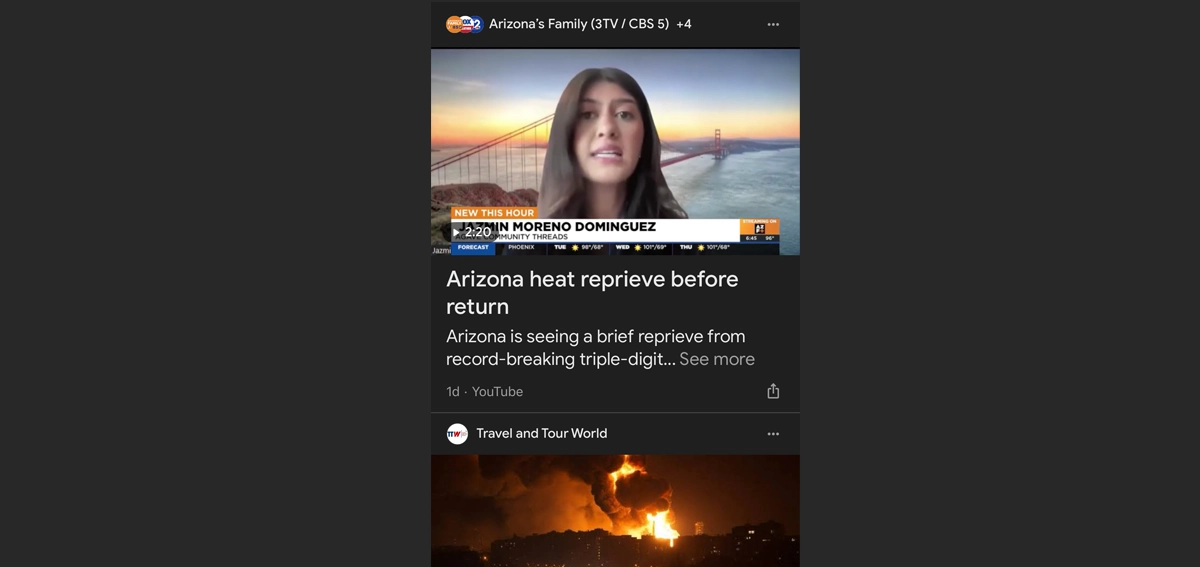
Traffic Winners and Losers
Generally speaking, content publishers that provided in-depth expertise and local relevance experienced significant upswings in visibility resulting from the February 2026 Google Discover core update. Conversely, those that put out generic low-quality content, content from overseas publishers, or sensationalized headlines (clickbait), suffered heavy losses in visibility.
Visual Assets in Google Discover Performance
The February 2026 Google Discover core update amps up the importance of higher resolution images. That means images must have a minimum width of 1200px. This helps improve user engagement.
User Engagement Signals
A fundamental change resulting from the February 2026 Google Discover core update is a move away from prioritization of click-through rates to boosting visibility of deep, authentic user engagement from quality content. Thus, clickbait and sensationalized headlines gets lower priority, in favor of original, high E-E-A-T content, with strong local relevance and that is “people-first” centric.
Optimizing for the Personalized Feed Experience
It is important to create titles and headings that promise clear value, such as “3 Easy Ways to Improve Your Sleep.” Therefore, skip the utilization of hype and clickbait tactics or risk losing visibility.
The old SEO adage that “Content is King” still holds true with the February 2026 Google Discover core update, but the definition of content now prioritizes originality, local relevance and deep topical expertise.
 EMAIL US