

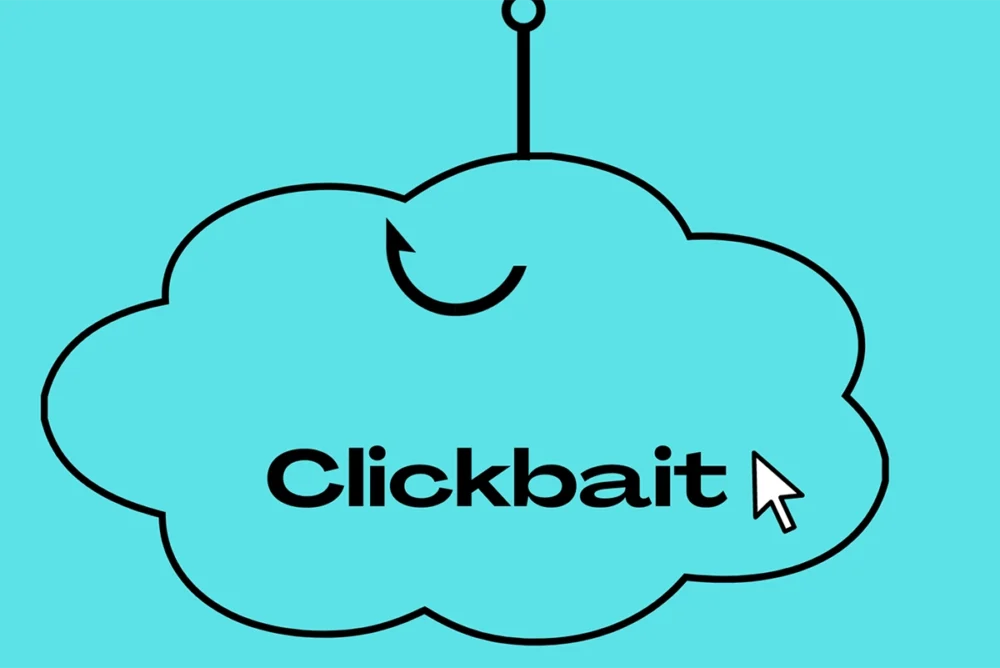
From time to time, clients ask some really great questions. One of those happened just the other day so I thought I would address that in this article today. In this case, a client asked to explain the term clickbait.
Clickbait is very commonly found on the web and is designed to pull you in with promises of big reveals, but often does not deliver.
What Exactly is Clickbait in Simple Terms?
Clickbait is a sensational and/or misleading headline found on the web, that is designed to elicit an immediate and compelling “curiosity gap” and “information gap” with the goal of getting the user to “click” on the headline link. Thus, clickbait is a digital marketing technique used to drive clicks by exploiting curiosity and emotional engagement, as well as the desire to find out more information.
Unfortunately, once the link is clicked, the article or information following that click is typically not what was seemingly promised in the headline.
Common Clickbait Formats and Examples
Clickbait is not only used on news articles, but also on social media platforms (Facebook, YouTube, TikTok, etc.) and blogs.
Many clickbait pieces follow familiar patterns such as “You Won’t Believe What [Celebrity’s Name] Did Next” to build suspense and curiosity around a famous or important person, hinting at scandal or surprise.
There are also lists with clickbait headlines such as “10 Things That Will Change Your Life Forever,” which promises valuable recommendations but often delivers superficial and generic information.
Another clickbait format might be: “The #1 Trick Doctors Hate” which plays on fear and exclusivity, making you wonder if you are missing out (FOMO) on such information if you do not attempt to find out more. These formats can be very effective in garnering clicks as they tend to spread fast on social media platforms.
Here is a classic example of YouTube clickbait: you see a compelling video headline such as “Crazy Pranks That Went Too Far” and it displays a fabricated thumbnail of someone’s eyes bulging with an outrageous facial expression, but that person never actually appears in the video.
Another example of clickbait might be a celebrity news publication posting a headline that claims to disclose a Hollywood actor’s net worth, such as “[Actor Name]’s Net Worth Will Shock You” then leads to a mundane article about that celebrity’s upbringing and career, but no mention of the actor’s net worth.
Why We Click on Clickbait
There are two closely related psychological mechanisms that explain why we respond to clickbait.
Information Gap
When we sense a gap between what we know and what we might know (information gap), it compels us to find out more (by clicking the link) causing our brain to release dopamine, the neurotransmitter of reward.
Curiosity Gap
The curiosity gap is a powerful, emotional desire to fill find out more (fill a gap in knowledge) about a topic of interest that compels us to find out more (by clicking a link) causing our brain to release dopamine, the neurotransmitter of reward.
Negative Impact of Clickbait
Despite a short-lived increase in clicks and traffic resulting from clickbait, there are some serious longer-term consequences.
Erosion of User Trust and Brand Credibility
When a headline hypes up expectations but fails to deliver, we feel tricked. Trust fades and so does loyalty as visitors stop returning. Clickbait also hurts brand authority and brand credibility. When search engines notice poor user signals resulting from clickbait (higher bounce rates and lower dwell time), they can rank those pages lower. In the end, what starts as a temporary traffic win turns into a longer-term credibility fail.
What is Being Done About Clickbait
Social media platforms such as Facebook, have more recently begun to crack down on clickbait, cutting organic the organic reach of publishers using such tactics.
Search engines have also taken steps to mitigate clickbait. For example, Google has more aggressively targeted clickbait in their more recent updates such as their February 2026 Discover core update. This change significantly reduces visibility of clickbait in the Google Discover feed.
How Can You Avoid Creating Clickbait Yourself?
Ethical writers strive to inform, not to just get clicks. Therefore, balance something intriguing with truth. Ask yourself: does this headline match what I would find useful? If not, then come up with a headline that aligns with the actual value of the content.
 EMAIL US